

Building HearMe: accessibility in the architecture, not as an add-on
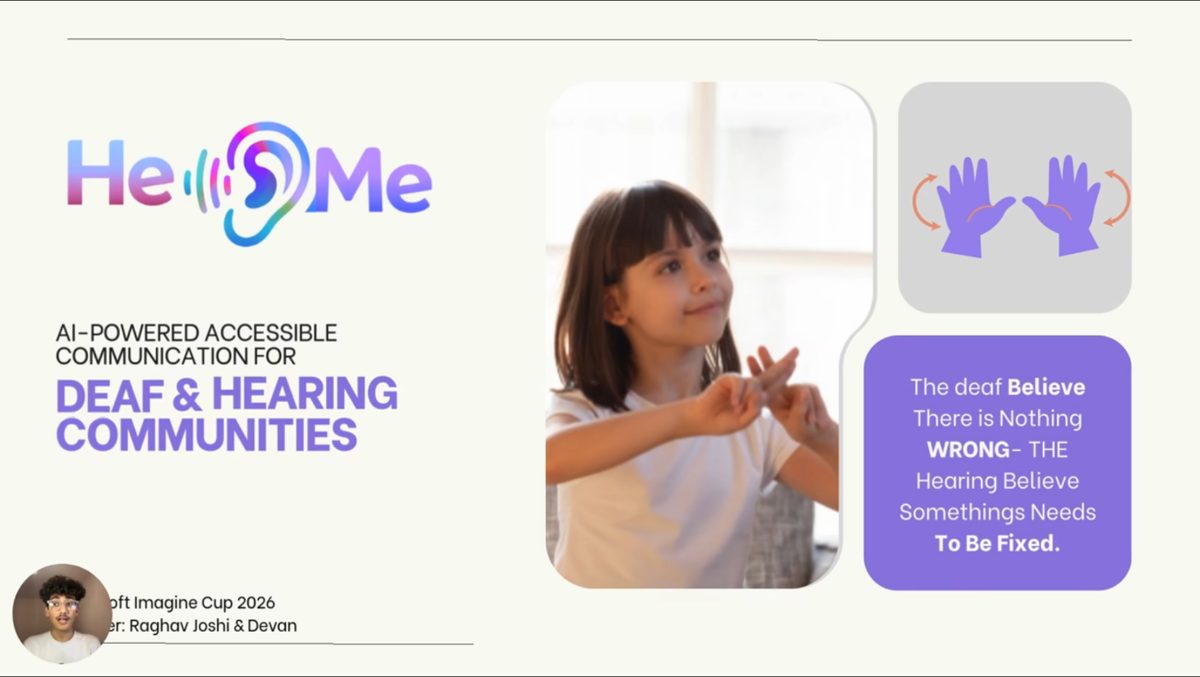
Despite the rise of online communication platforms, accessibility features are secondary add-ons, real-time captions are inconsistent, sign-language support is rarely integrated, and deaf users depend on interpreters. That creates inequality in digital participation.
HearMe changes the foundation: instead of adapting accessibility later, we built it into the architecture.
- Real-time speech-to-text transcription
- Text-to-sign conversion
- Virtual sign-language avatars
- Role-based modes (deaf / hearing / interpreter)
- Secure WebRTC-based video calls
Digital communication should never create dependency. It should enable independence. HearMe is our attempt to build that standard — and it's now in structured development through multiple innovation programmes at my university.